Some stand-out projects
One of the earliest surviving English carpets: a 1740s needlework carpet, Raby Castle
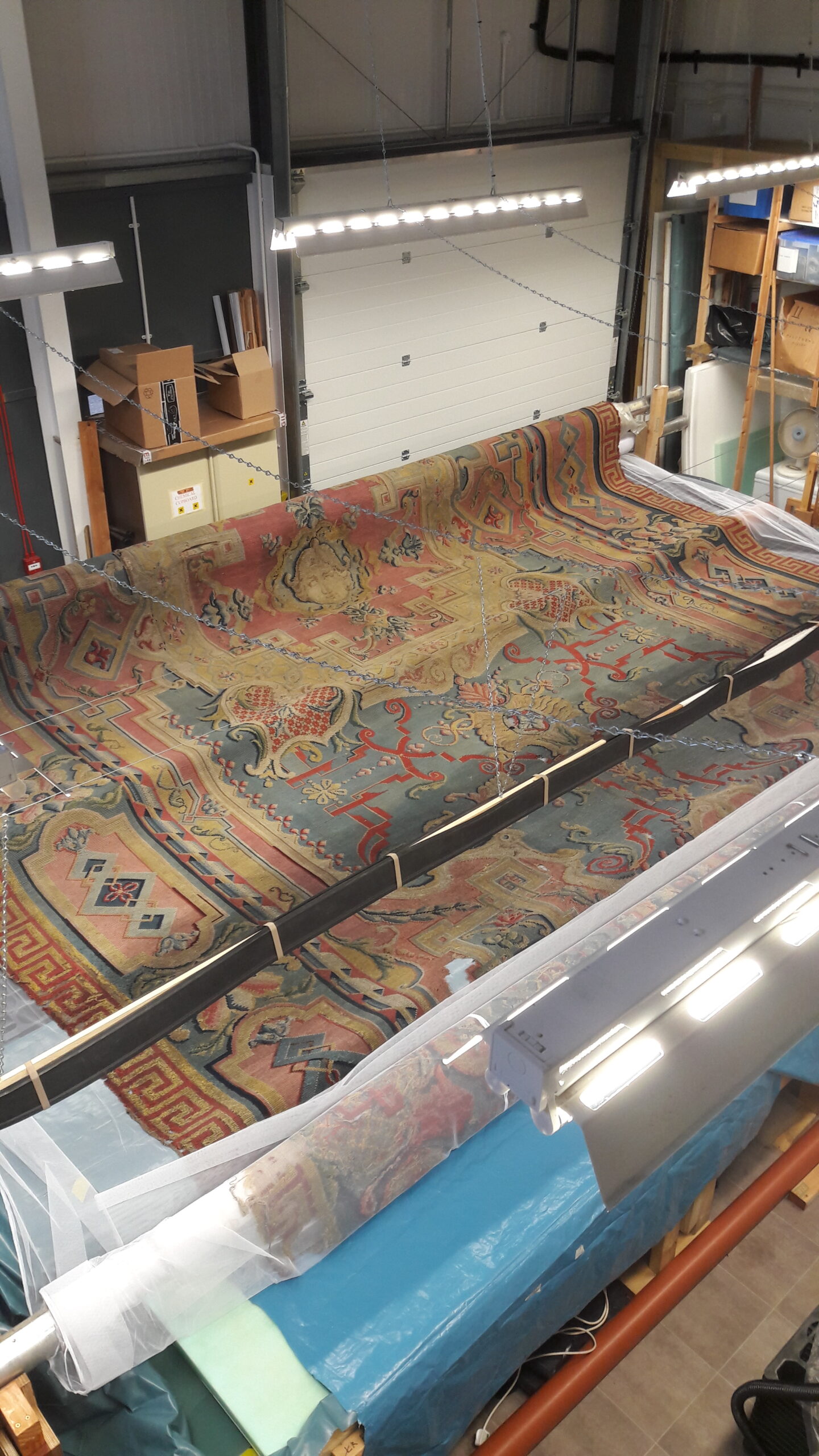
An article by John Cornforth in Country Life (1990), entitled Architects’ carpets at Raby? talks of “… two outstanding carpets; one, possibly the only Gothick example to have survived from the 18th century; the other, the 26ft 6in by 17ft Great Carpet, an astonishing achievement by the 18thcentury Lady Darlington, who worked it. Remarkably, both may have been designed by architects.”
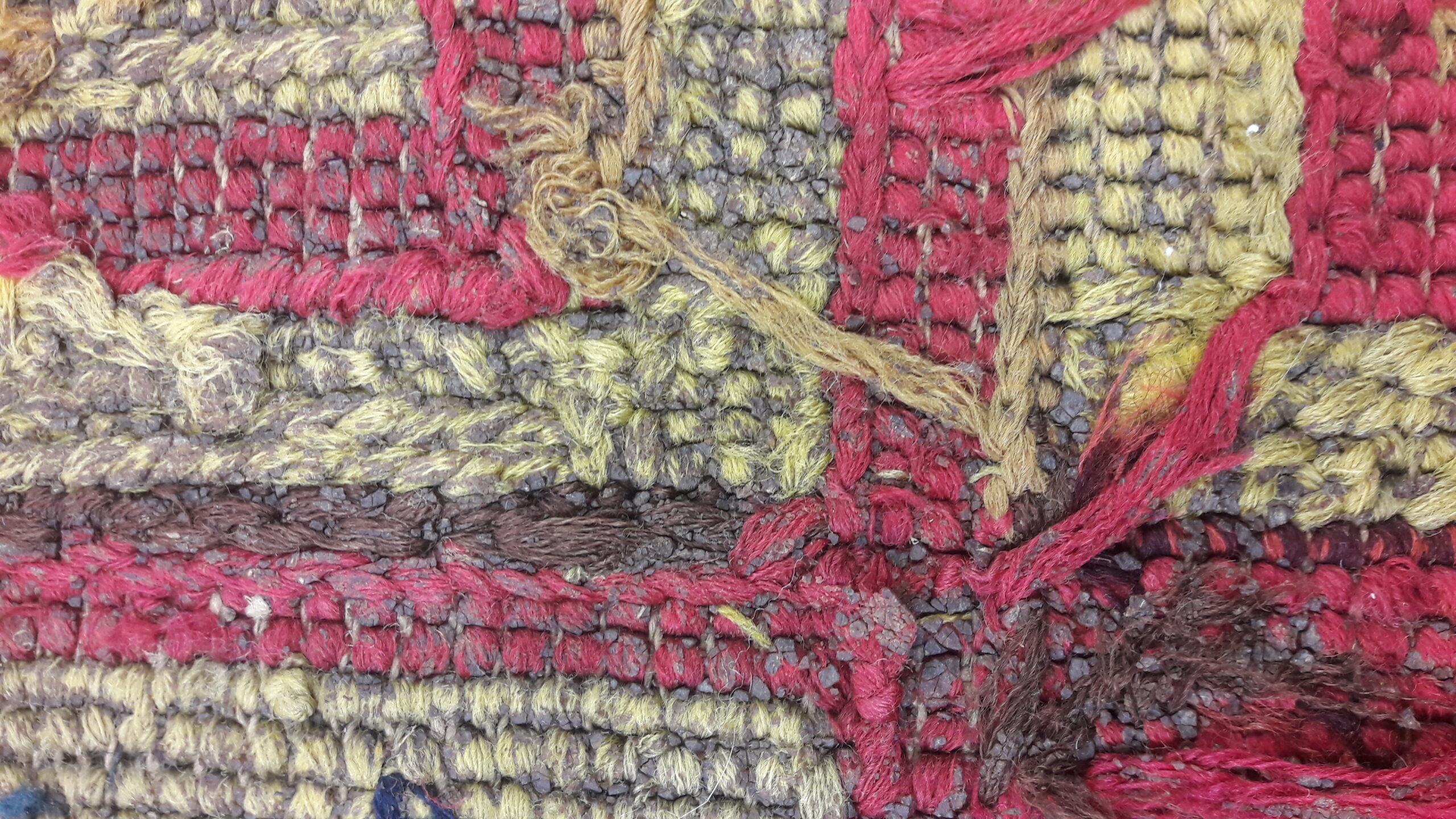
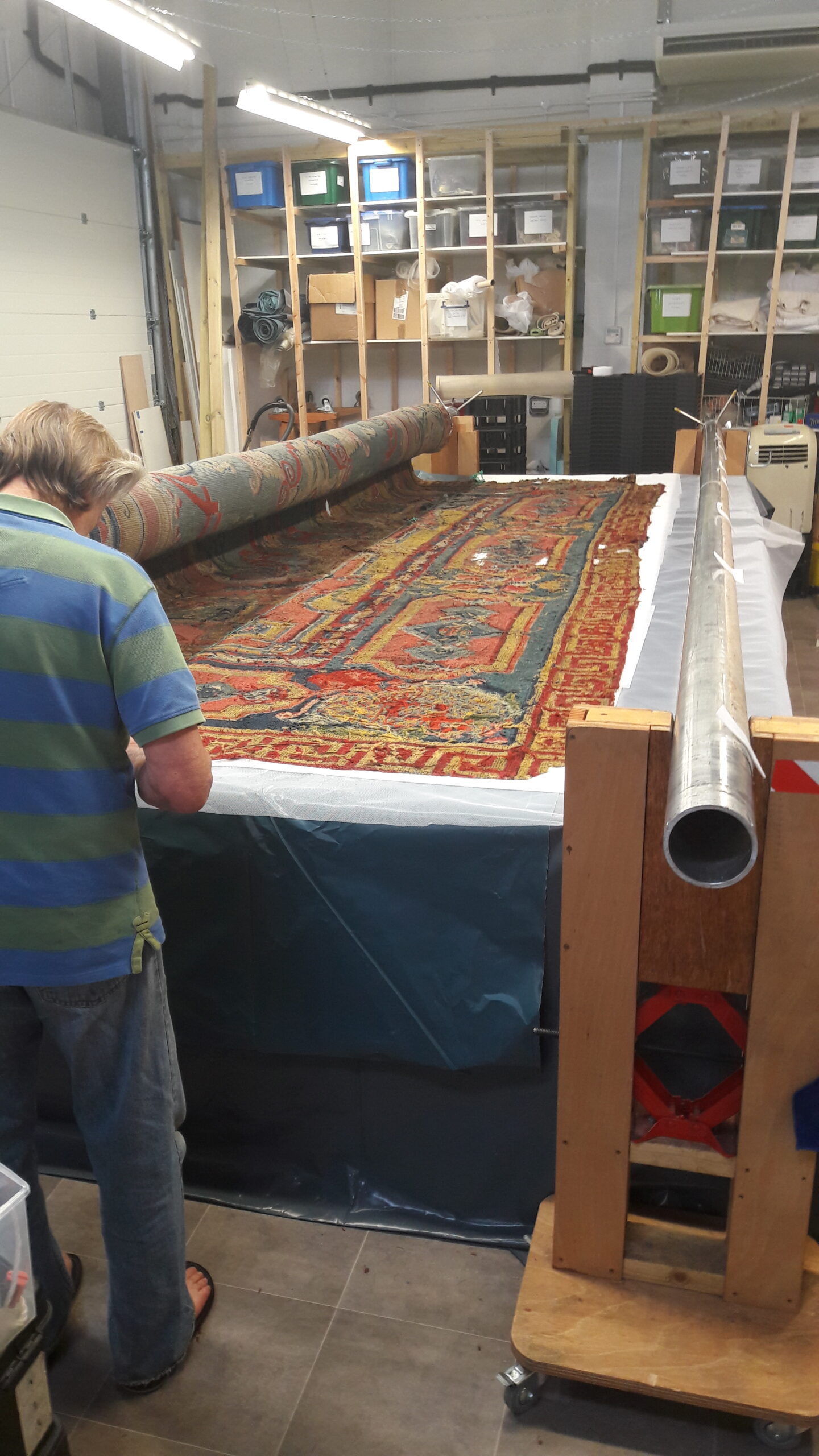
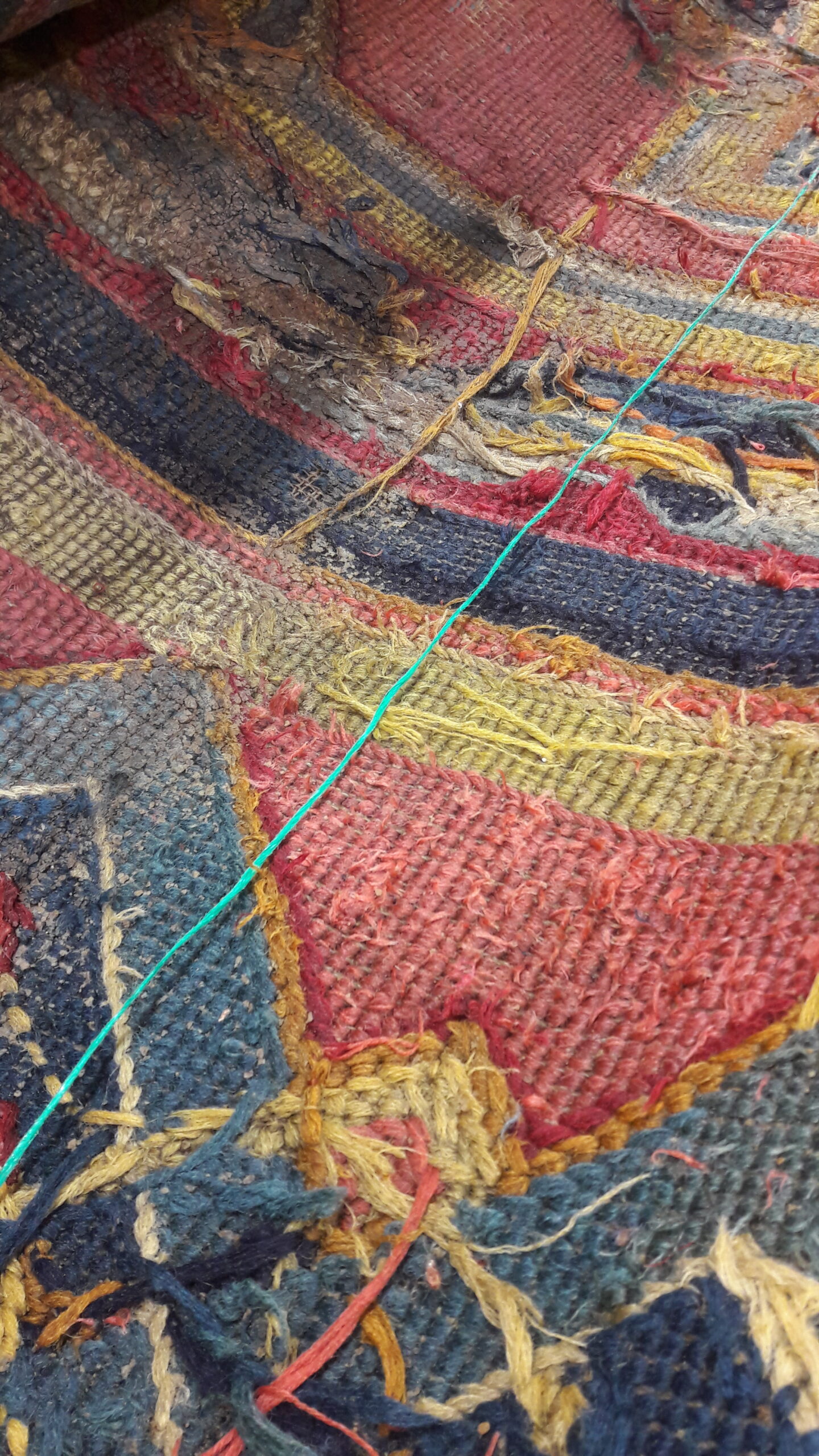
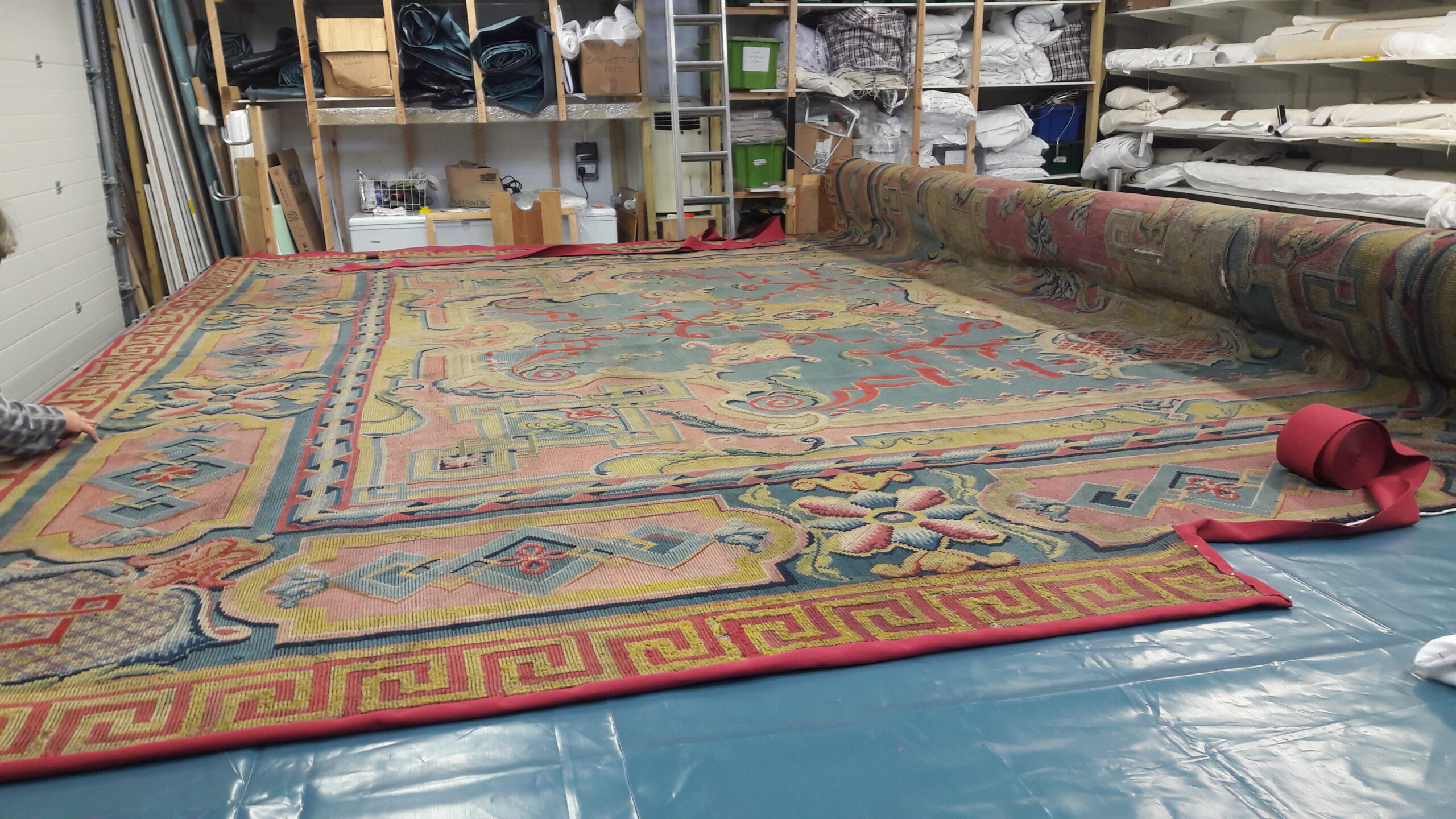
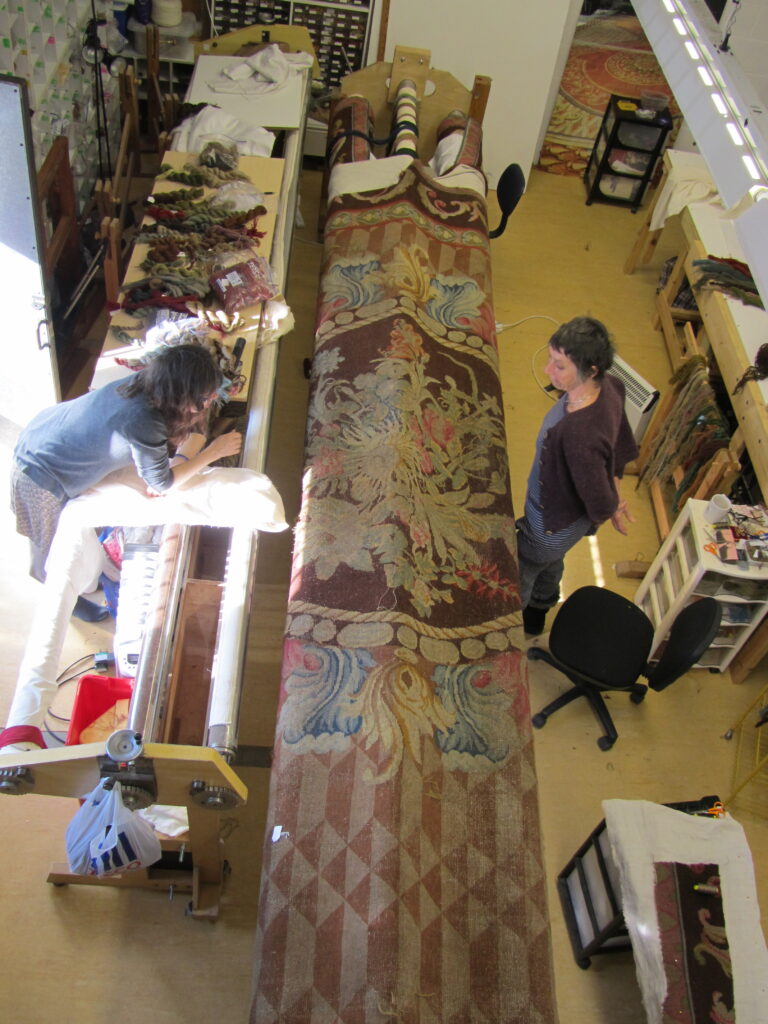
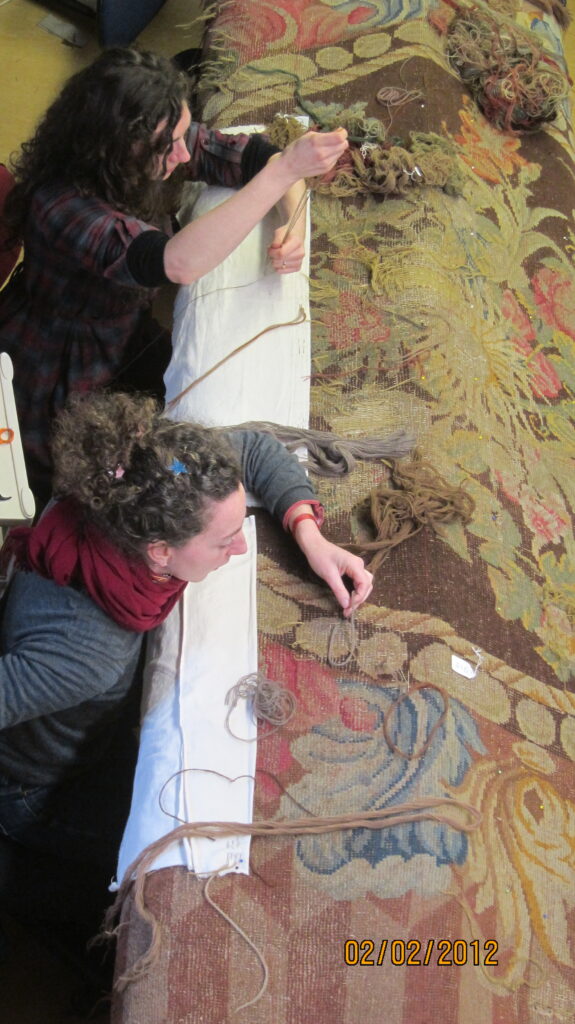
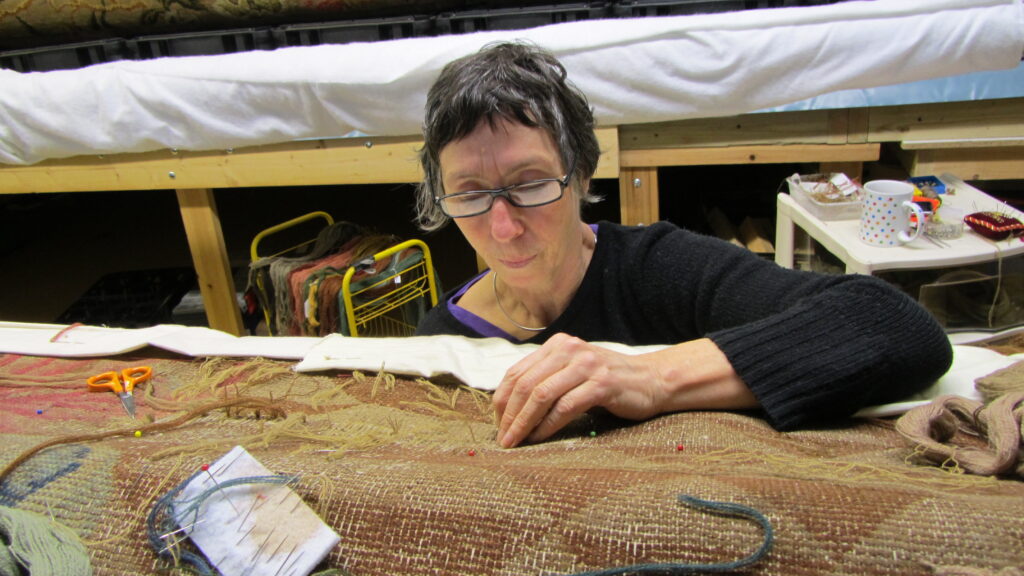
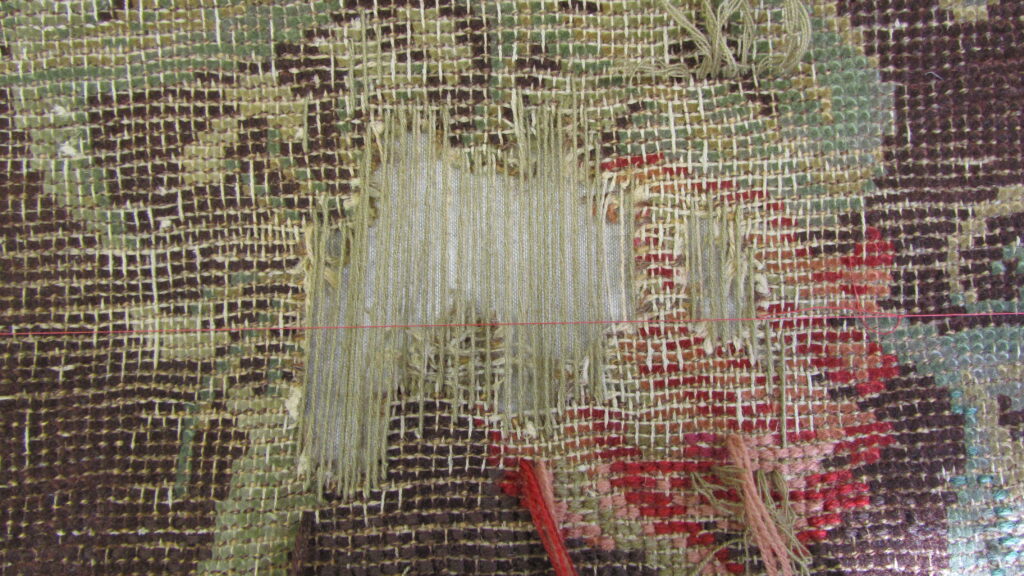
It is the latter of these, the “Great Carpet”, clearly an important piece, which we worked on between 2017 and 2018. The owner periodically displayed it so to restore it to a presentable condition, we cleaned it, removing a caked layer of adhesive, and also undertook repairs due to its dilapidated state.

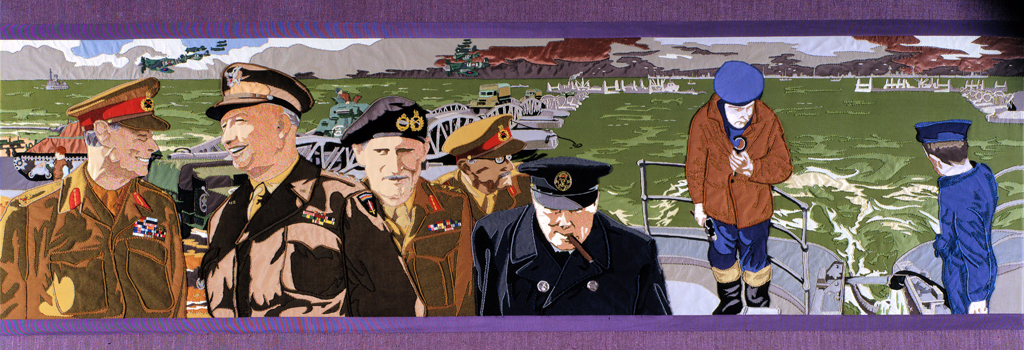
A modern sequel to the Bayeux Tapestry: the Overlord Embroidery (1974), D-Day Museum, Portsmouth
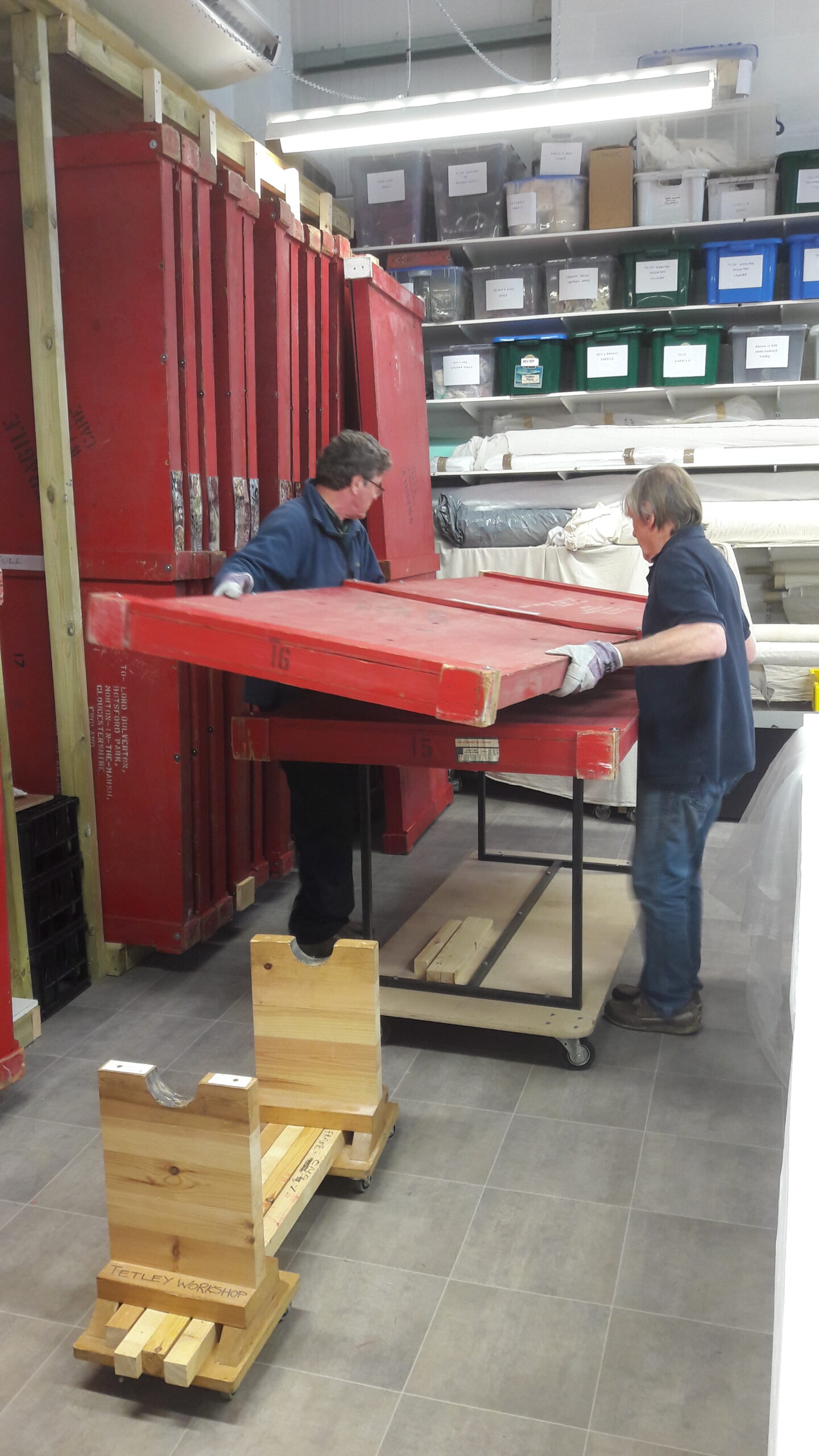
The conservation of the 34 panels of the Overlord Embroidery involved their complete removal from the museum. They required cleaning and some repair, some improvement to the frames and some re-interpretation of their display to better present them to visitors.
The embroideries were worked upon at our workshop in 2017, before a successful re-installation back in Portsmouth, after specialist storage.

A Victorian survival: a collection of 1860s carpets, Brodsworth Hall, South Yorkshire
The Hall was built between 1861 and 1863 and survives as a mid-Victorian vision of a comfortable country house, with many of its original furnishings in place and formal gardens laid out around it.
When English Heritage acquired it in the early 1990s, amongst those original furnishings were around 160 period carpets, made especially for the Hall, which were of great historic and artistic interest but which were in an extremely dilapidated state.
It had been a great struggle for the last owner to keep the house maintained. He had had dogs, Binkie and Pippin, who had not been let out for two years! Also, moth infestations, carpet beetle and rats and mice. The works.
Jonathan Tetley has been treating these carpets now for over 30 years, most recently, the drawing room carpet, in 2017.
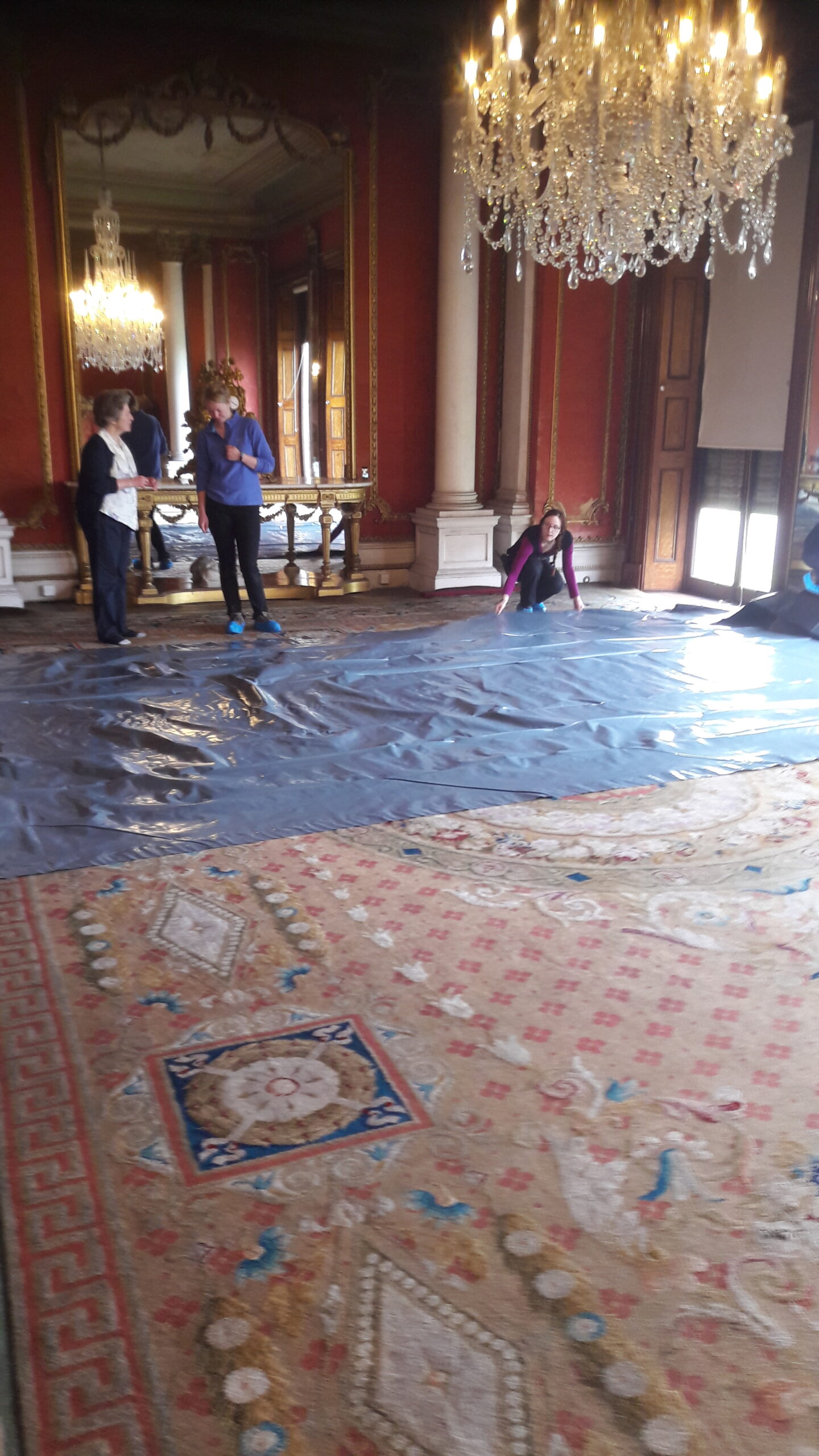
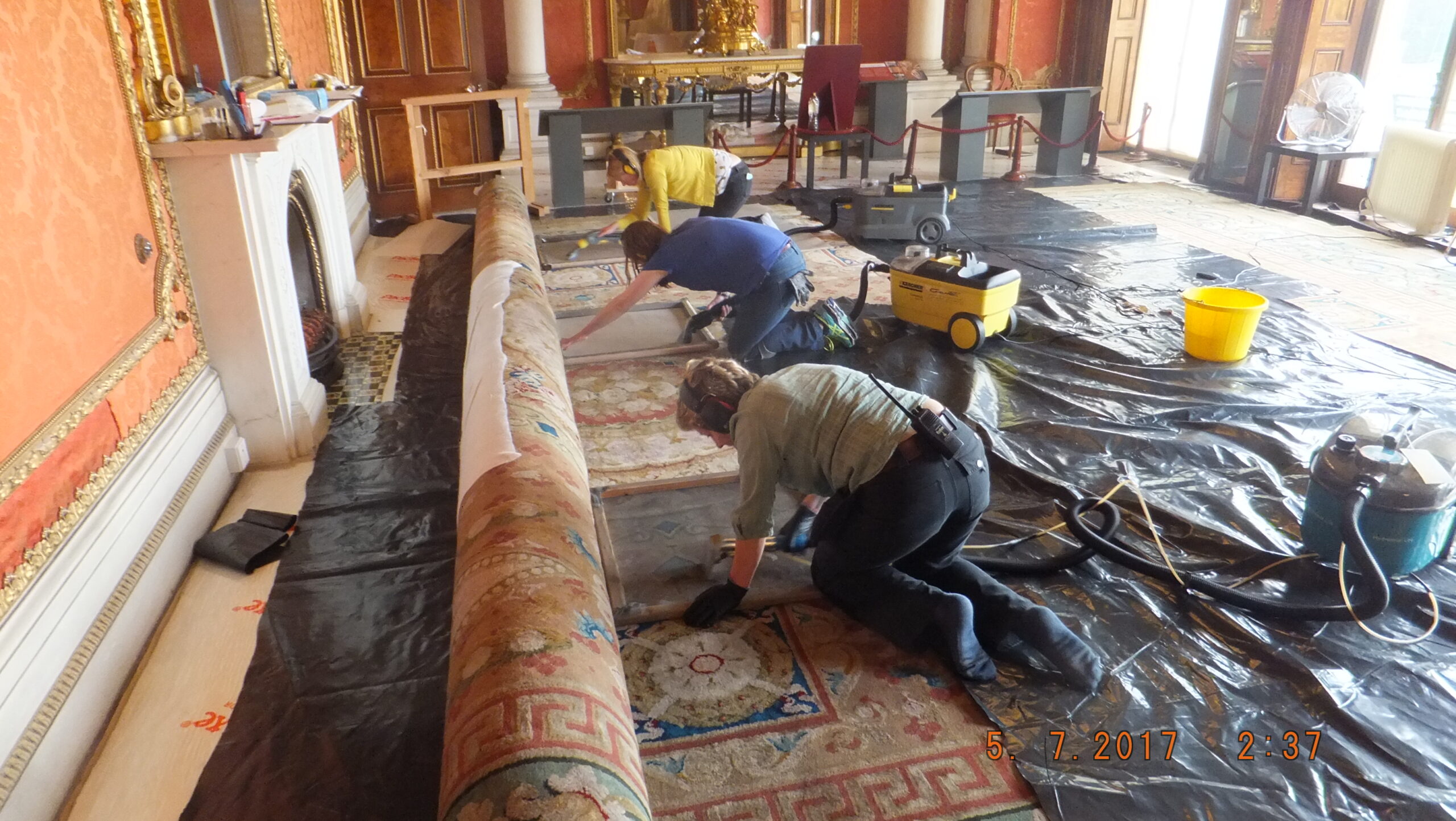
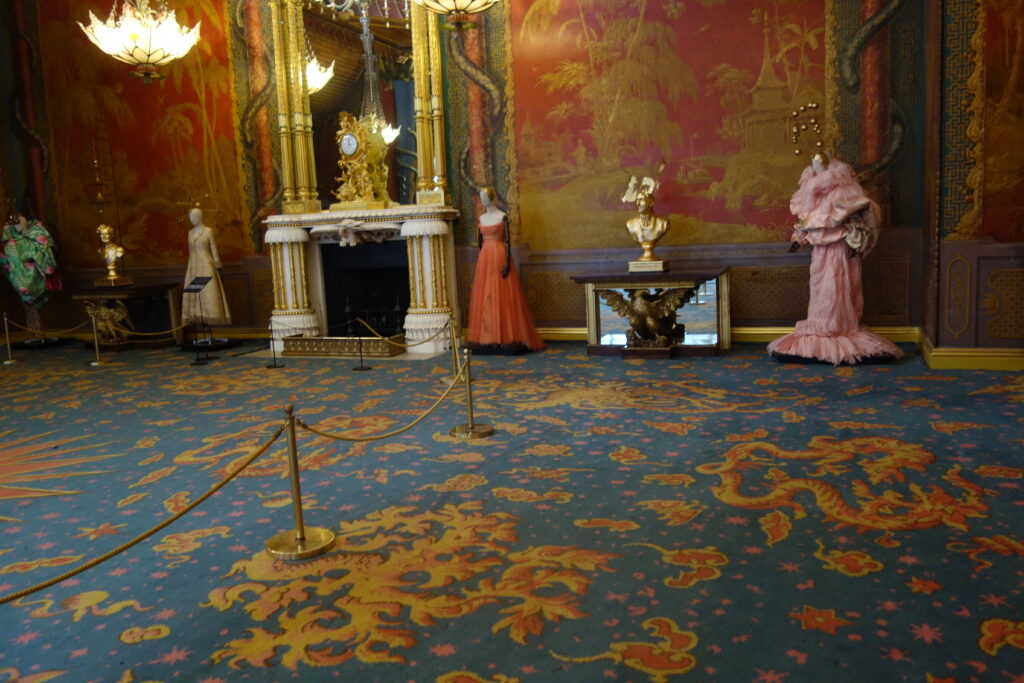
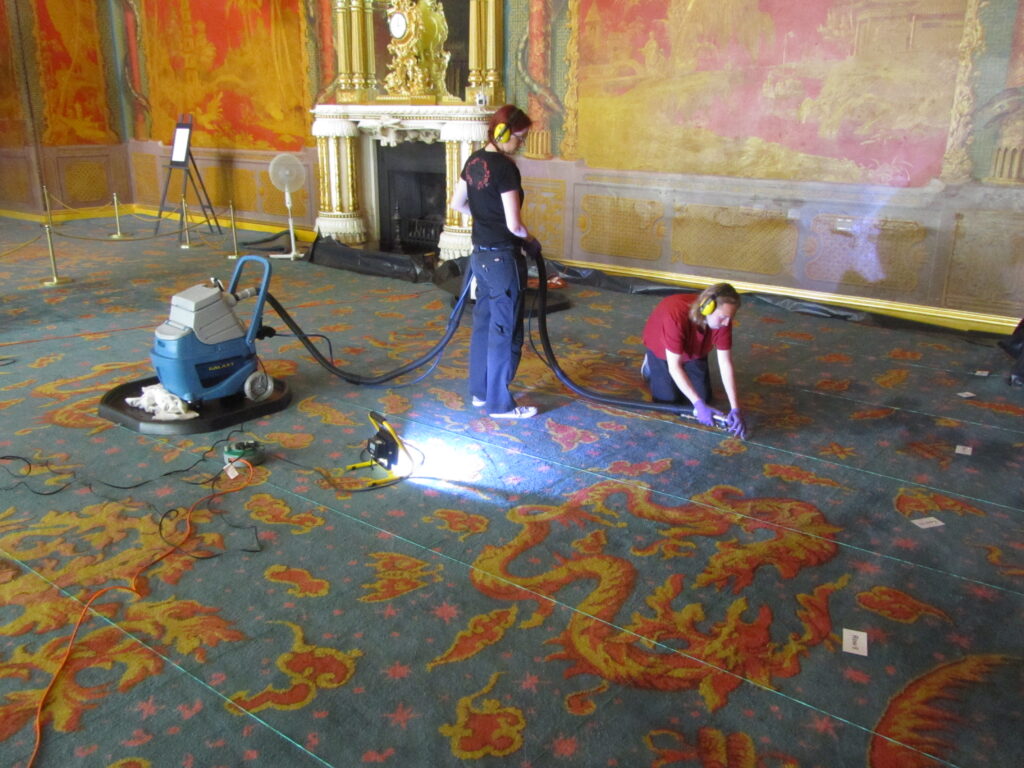
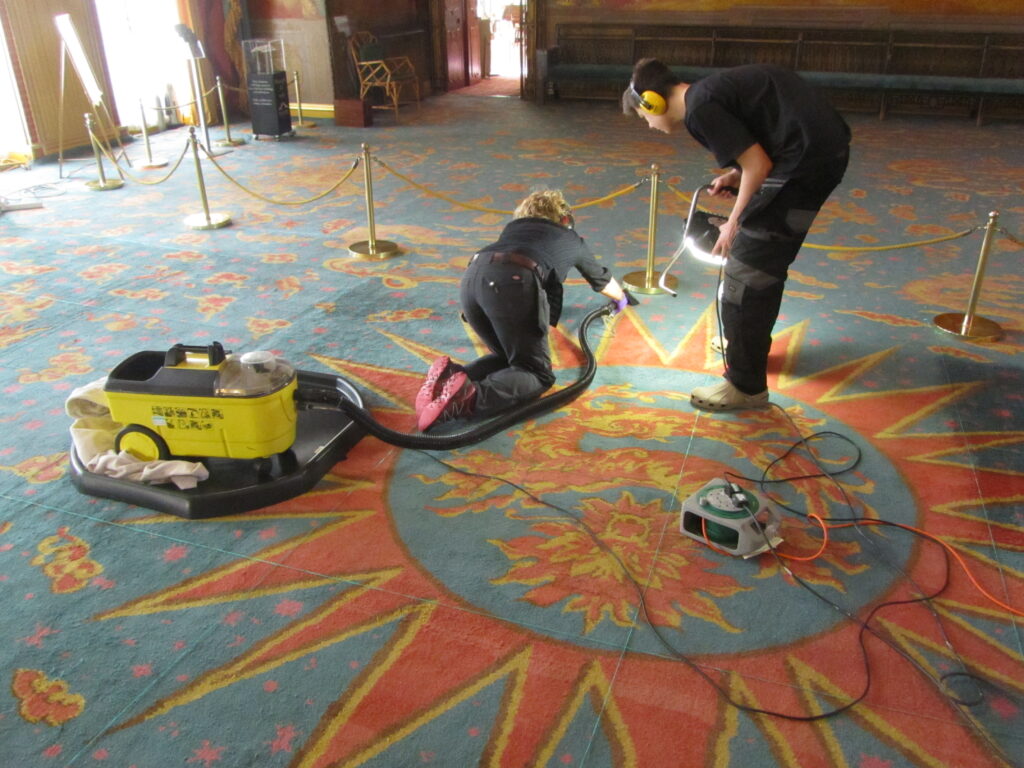
A striking setting: the Music Room carpet at Brighton’s Royal Pavilion
The Music Room carpet at the Royal Pavilion lies in its fabulously gaudy surroundings, enshrined in red and gold canvases, lit by chandeliers and beneath an extraordinary, domed ceiling. We cleaned it in the summer of 2019.
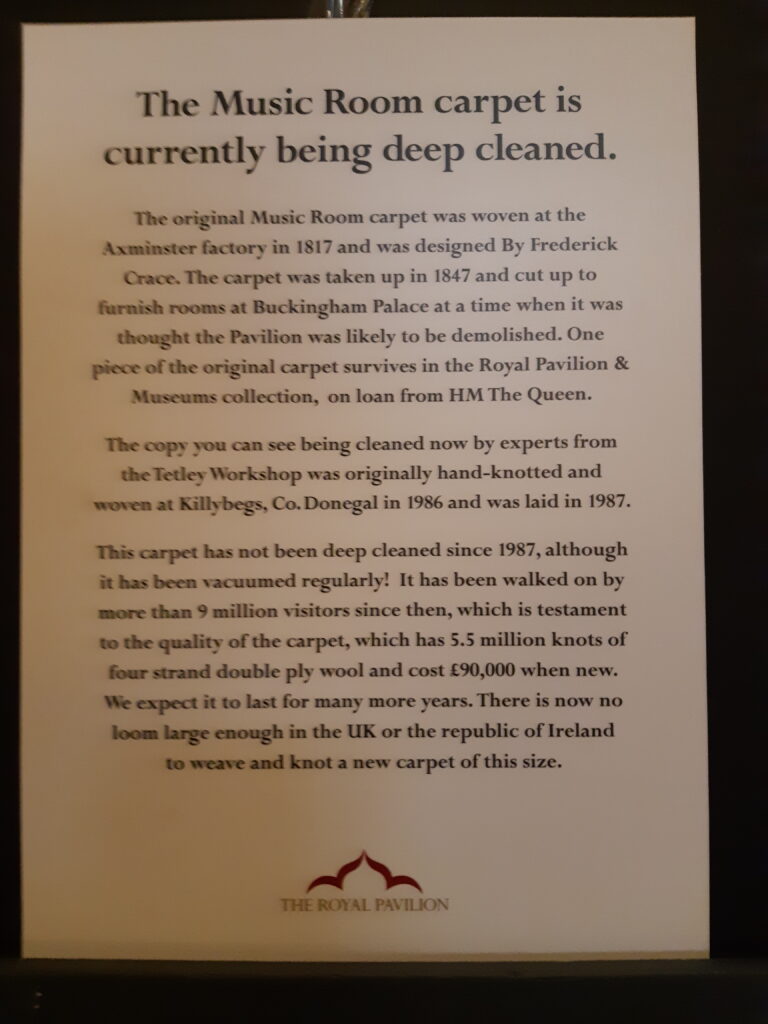
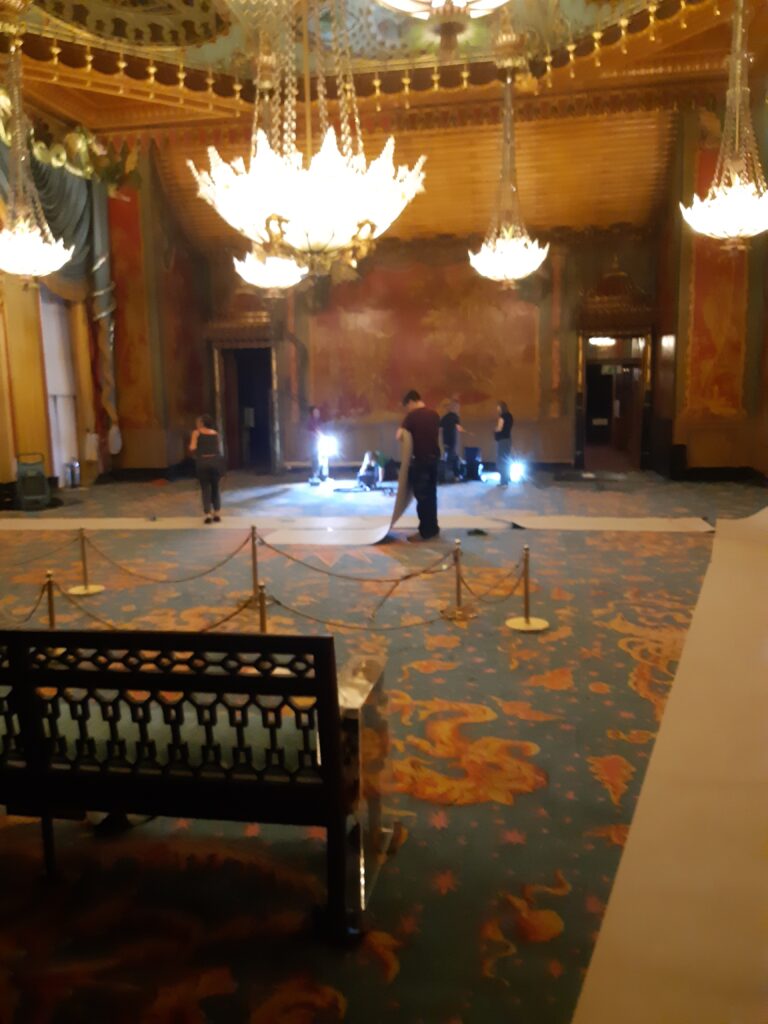
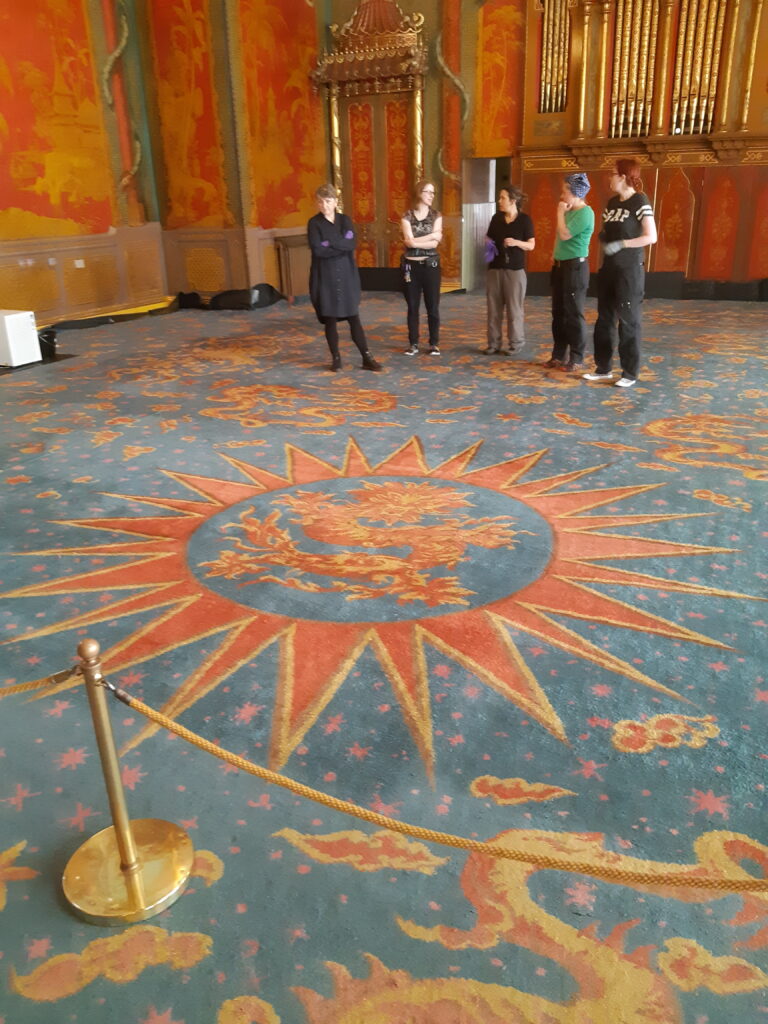
A grand carpet: A Templeton chenille carpet made for the Royal Pavilion at The Great Exhibition of 1851
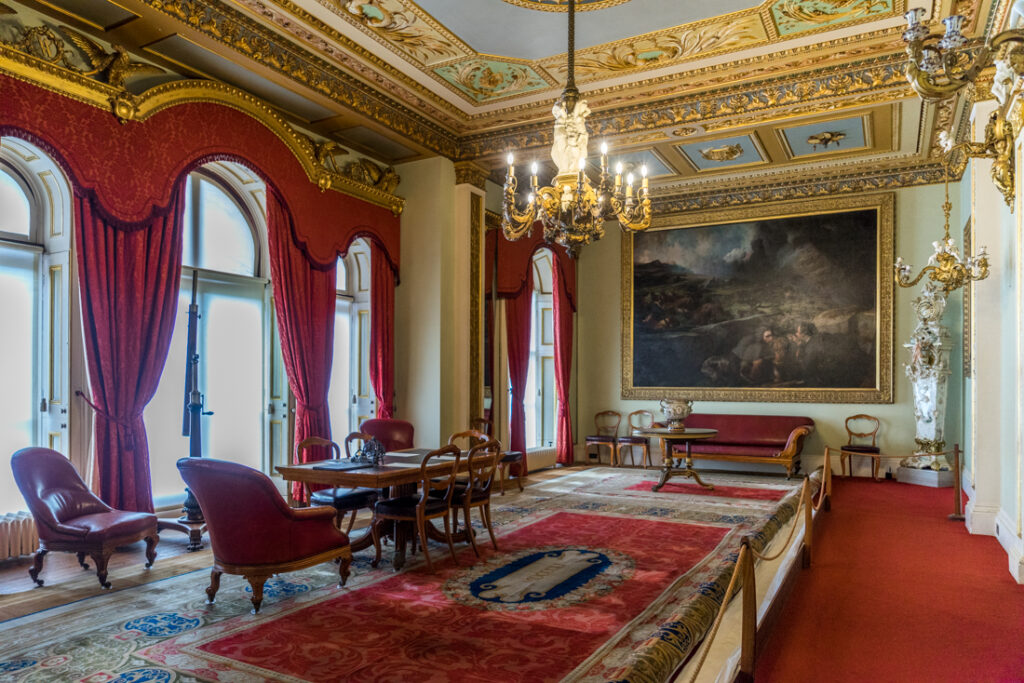
This large carpet had been given to the President of the United States by King Edward VI and was stored in The Smithsonian Museum, where it was flooded before being returned, with its royal insignia. The deteriorating bottom cloth had to be stitch-supported onto linen
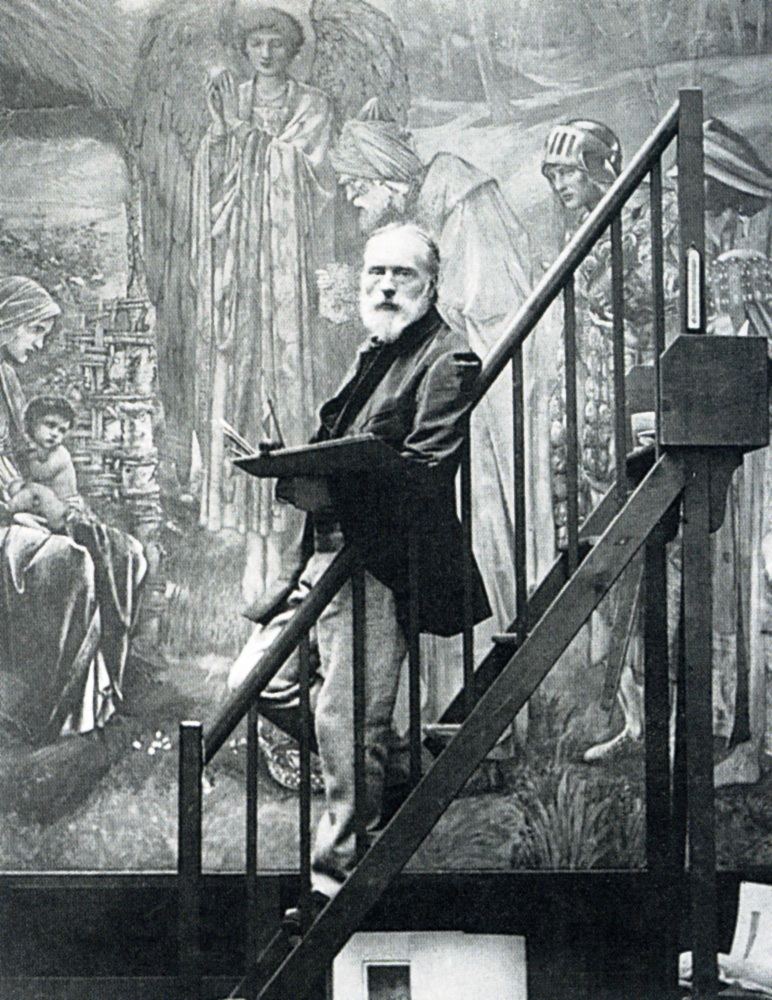
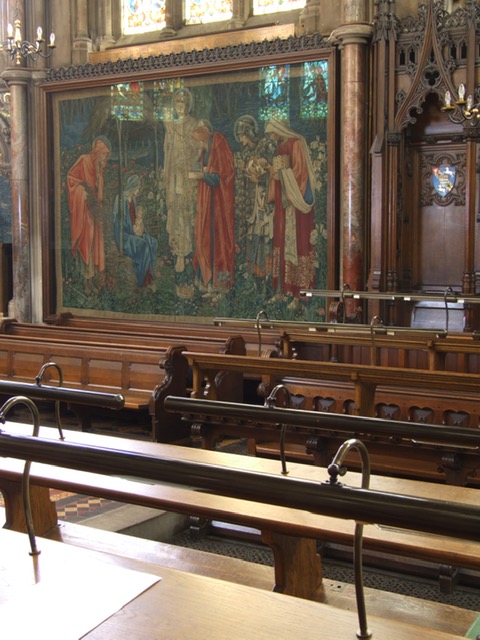
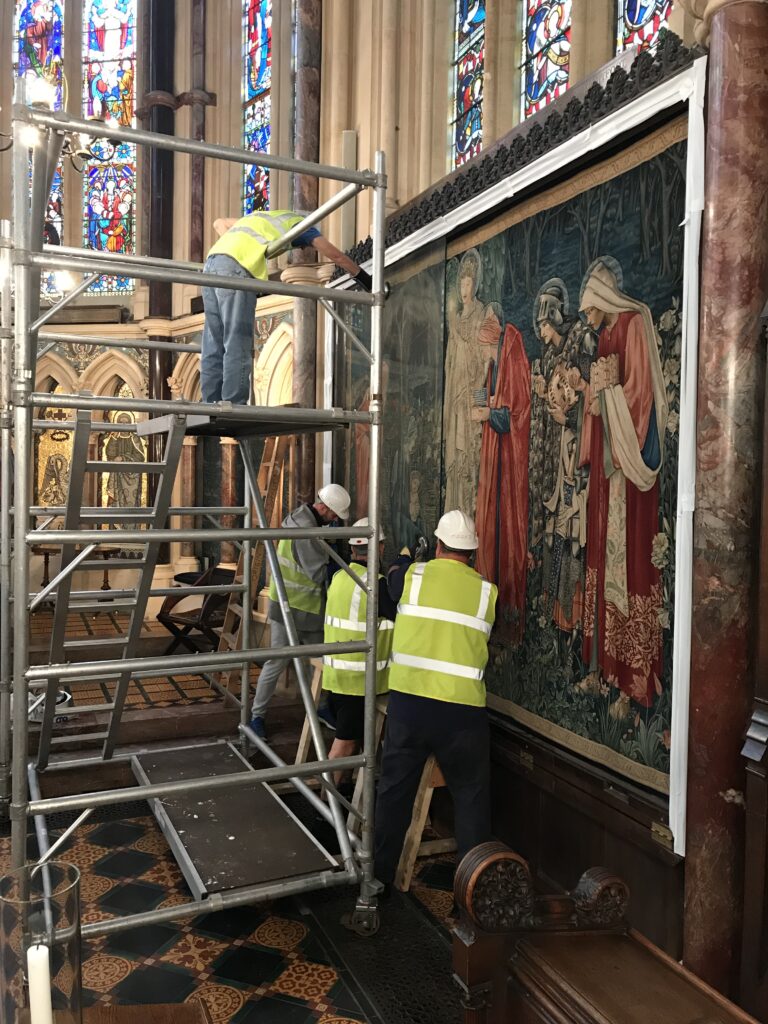
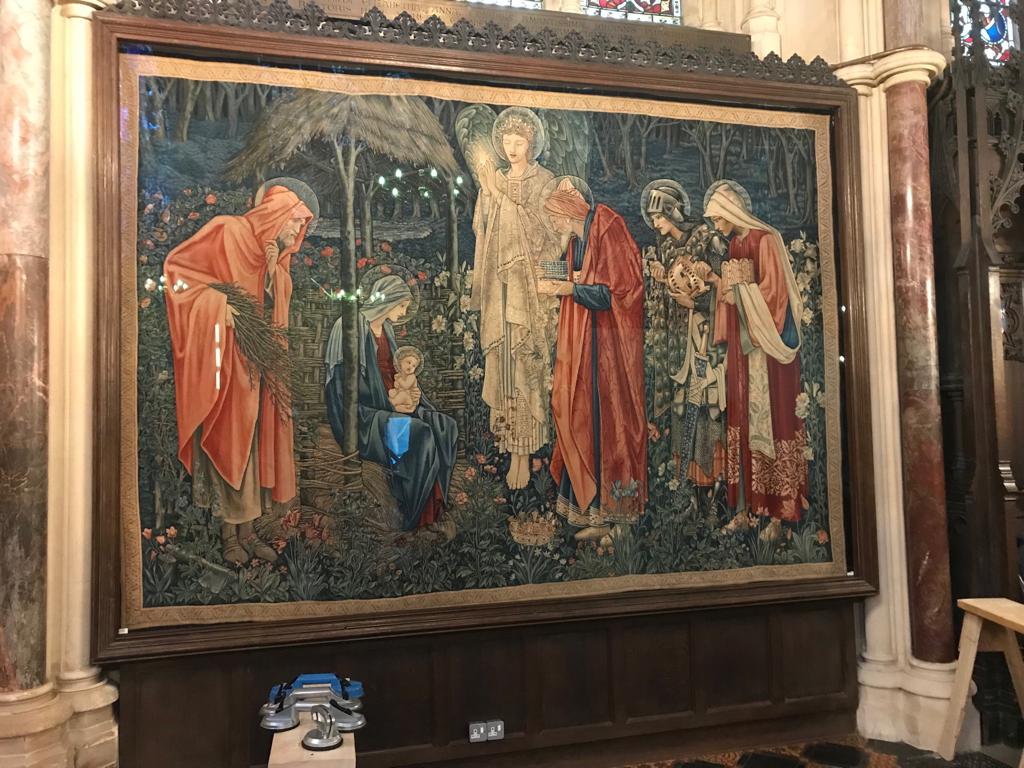
One of Sir Edward Burne-Jones’ most beautiful designs, woven by William Morris: The Adoration of the Magi tapestry, Exeter College Chapel, Oxford
This exquisite tapestry was designed by Edward Burne-Jones and made by William Morris and was presented to the College in 1890.
For many years, it has been displayed behind highly-reflective glass that not only affected its appearance to visitors but did not fully protect it from light and dust.
Jonathan was heavily involved with its careful removal from the Chapel so it could be thoroughly cleaned before being re-housed behind UV-filtering acrylic, which will both offer it protection and enhance and clarify its appearance.
There’s a short film about it here.
An intact collection of 18th-century Whitty Axminster carpets: Four important carpets at Dumfries House from The Scottish Enlightenment
After the rescue of the contents of Dumfries House from the auctioneer’s hammer, thanks to the timely intervention of HRH The Prince of Wales, four carpets designed by Thomas Whitty at the original Axminster factory needed conservation. The work included research which established the floral designs represented contemporary botanical discoveries shown in the work of Georg Dionysius Ehret. The designs were transposed to the carpet, the vivid colours made from dyestuffs, some of which were grown by Thomas in his dyers field.
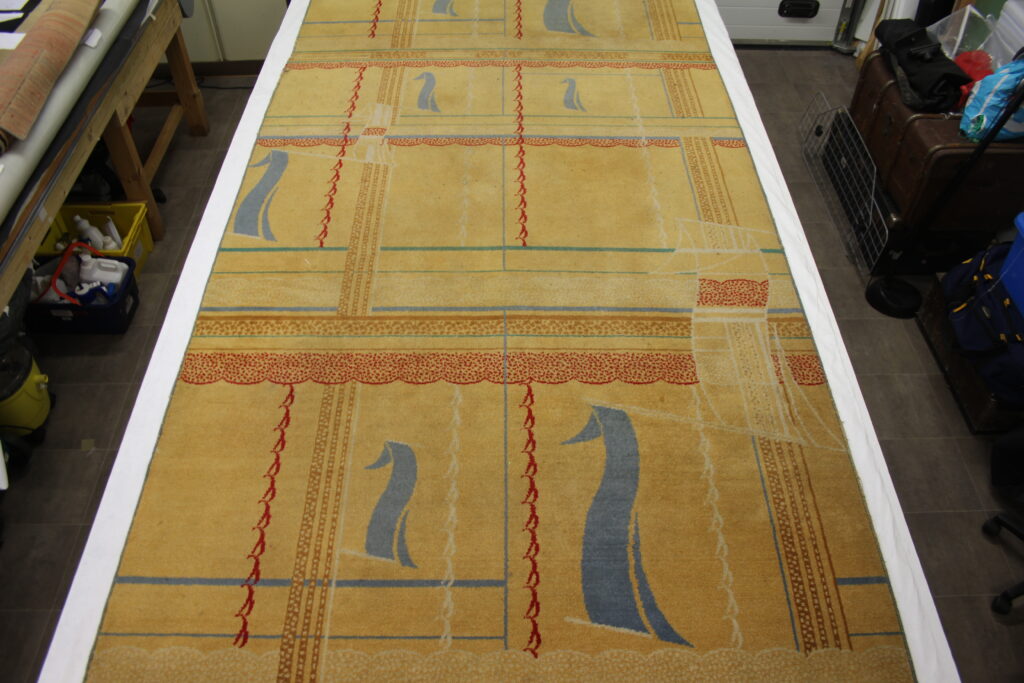
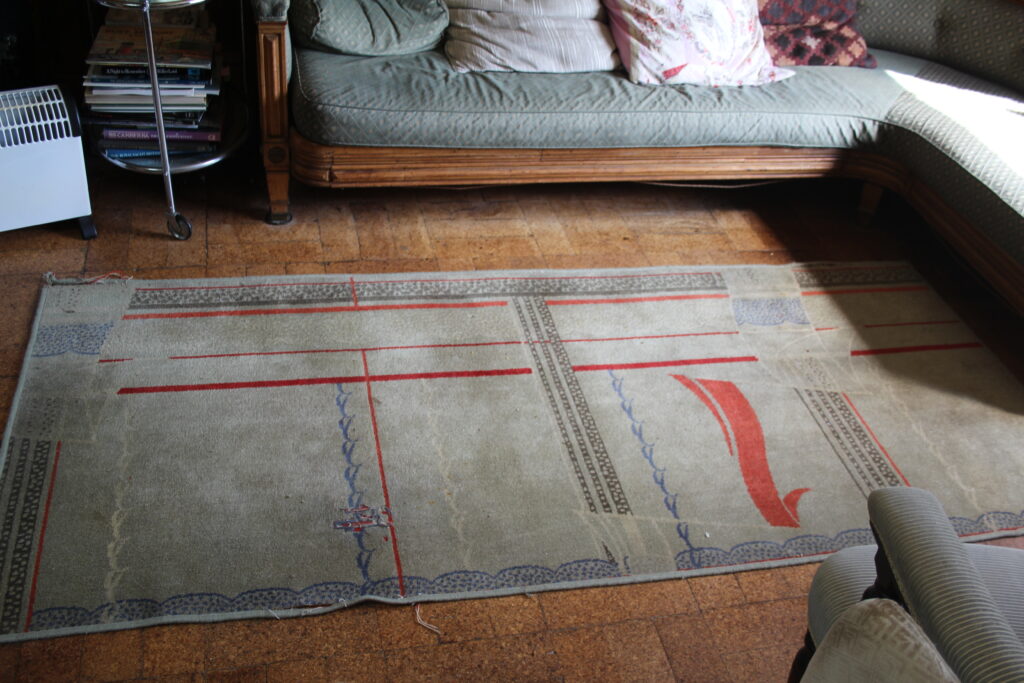
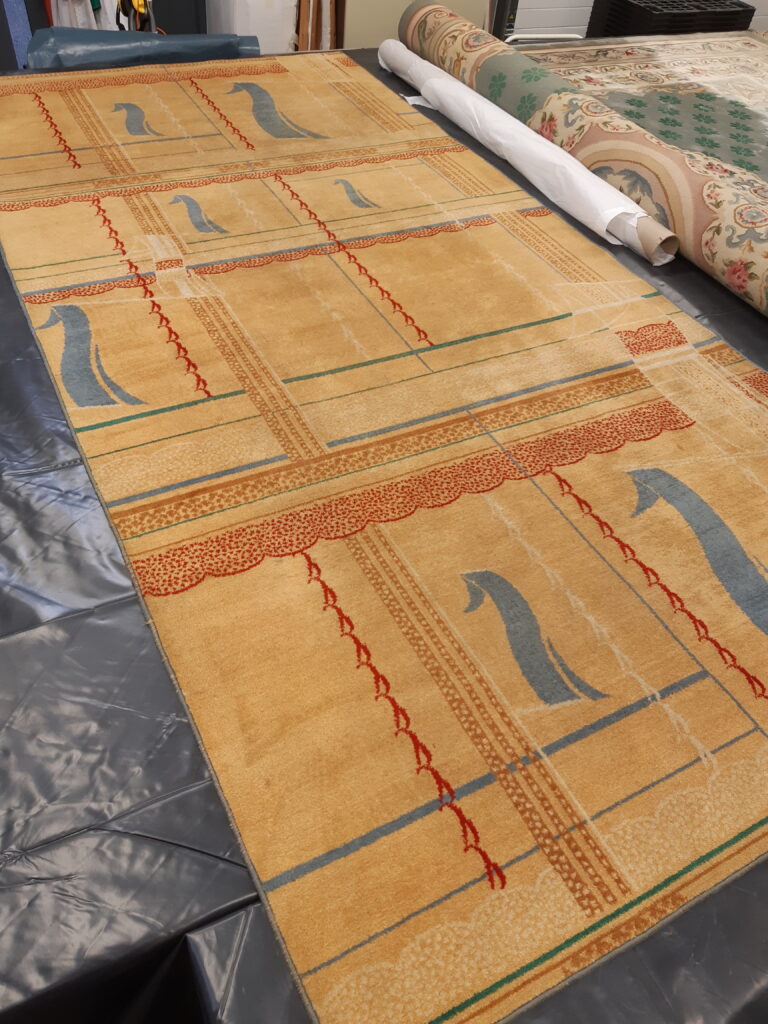
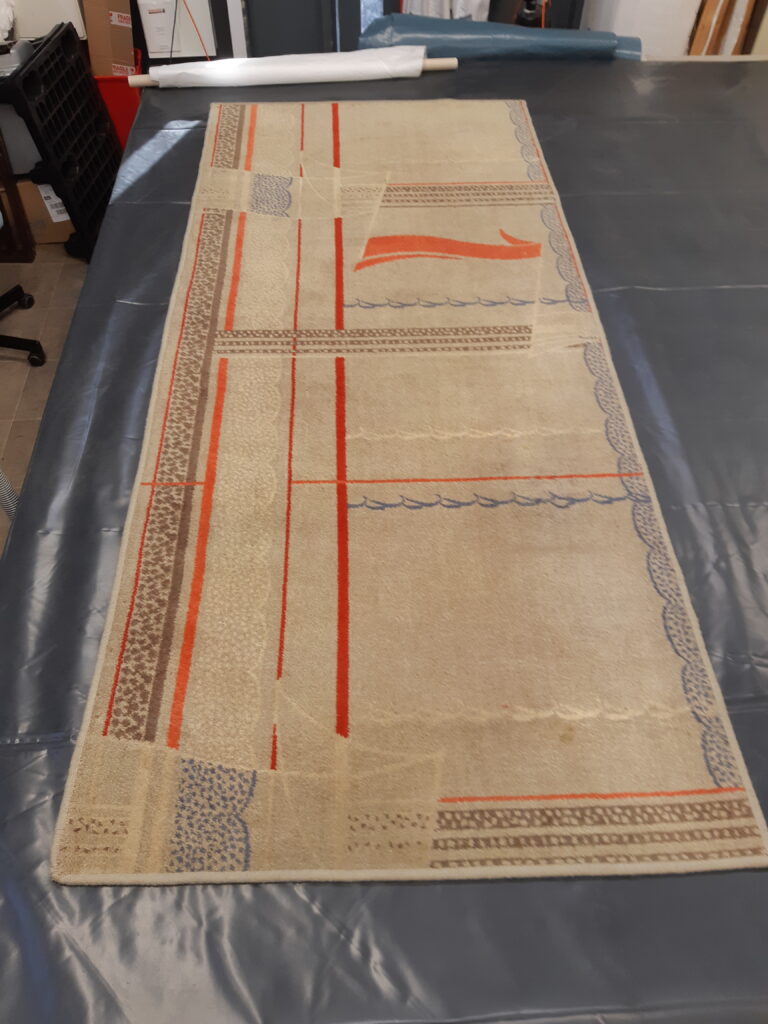
An unusual collection of carpets from a house built around part of the SS Mauretania: Three Cunard Line carpets from the early 20th Century
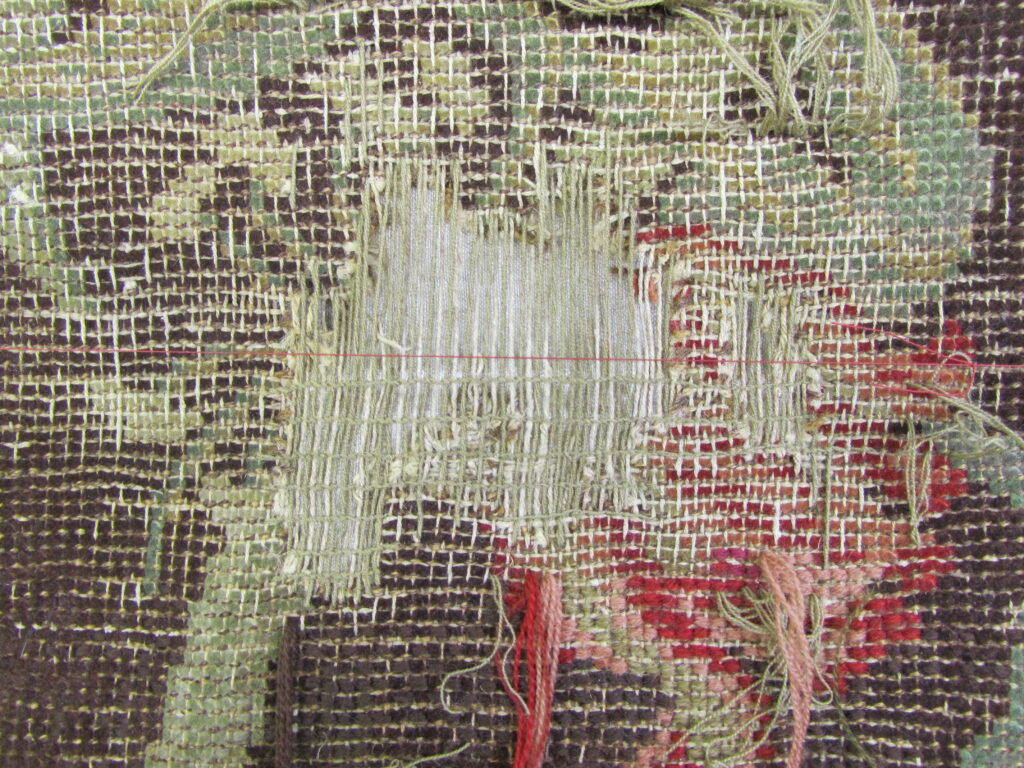
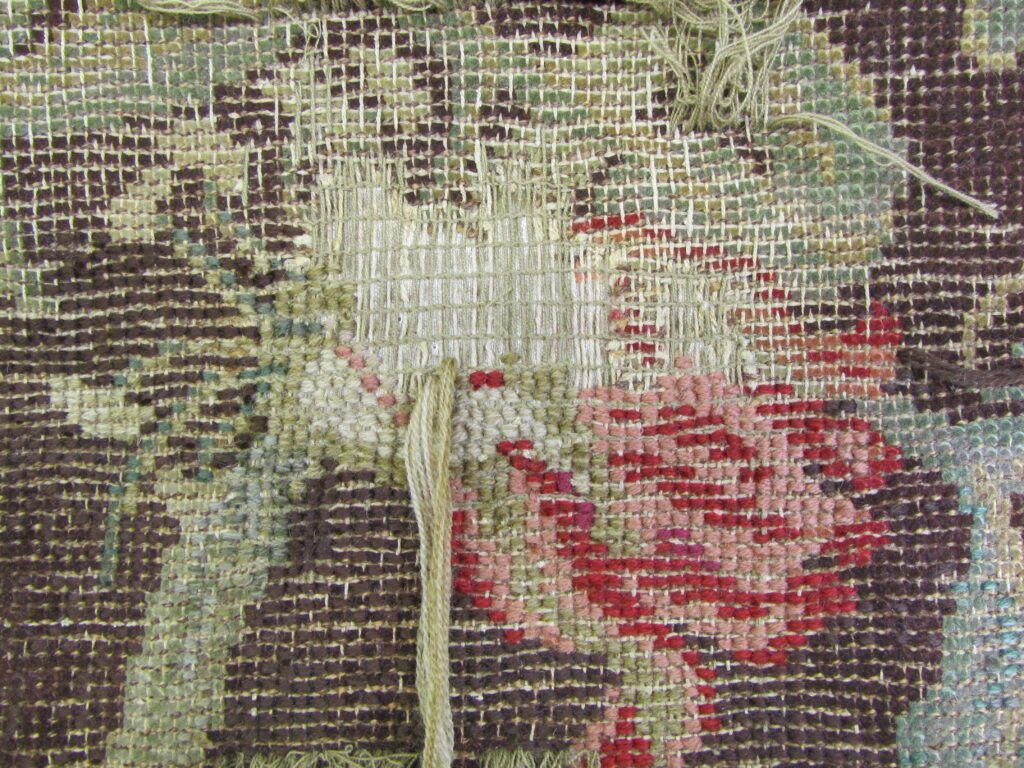
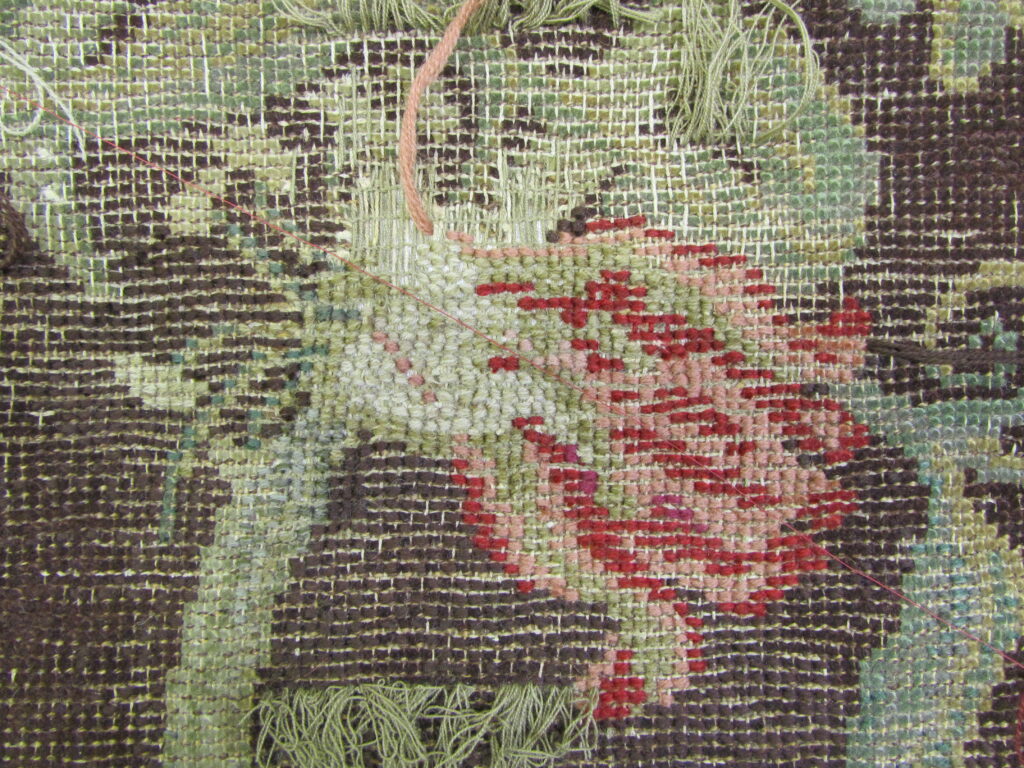
After reclamation of panelling, a large skylight, a balcony and several cabins in the 1930s, “The Boat House” became a repository for carpets and other objects from various Cunard liners, reminiscent of the days of luxurious transatlantic travel. These survivors from the Edwardian fitting-out of the famous ship needed cleaning and repair.